Bedding • Materials & Making
How Stitch Density Shapes the Feel and Lifespan of Cotton Bedding
A quilt’s stitches do more than trace a pattern. Their spacing and direction help hold the layers together, influence how the fabric moves, and give the surface its particular character—from softly rippled and relaxed to neat, structured, and precise.
In cotton bedding, where breathable cloth and tactile detail are often part of the appeal, stitch density deserves a place in the conversation alongside the fabric, batting, and care label. Understanding the relationship makes it easier to choose a quilt or coverlet that feels right in your room and suits the way you live.
What stitch density means in a quilt
Stitch density describes how closely the quilting stitches sit together across a piece of fabric. In a hand-stitched quilt, the maker’s individual stitches may be visible, with spacing that varies subtly across the surface. In a machine-quilted design, lines or repeated motifs are often more uniform. Either way, the spacing contributes to the appearance and handling of the finished bedding.
It is useful to distinguish stitch density from thread count. Thread count refers to the number of threads woven into a given area of fabric; stitch density concerns the placement of stitches used to join quilt layers. A smooth, tightly woven cotton shell can be paired with widely spaced quilting, closely placed stitching, or a pattern somewhere in between. These are separate construction choices, each affecting a different aspect of the textile.
There is no single ideal density for every quilt. The right balance depends on the batting, fabric weight, intended use, and desired drape. Stitching must secure the quilt’s layers while allowing the textile to retain the qualities that make it inviting: softness, movement, and a comfortable hand.
The quiet work of holding layers in place
A quilt is typically built from a top fabric, a layer of batting, and a backing. The quilting stitches connect these layers so the filling is less likely to shift freely within the textile. The distance between the stitched lines determines how much room the batting has to move, while the pattern itself can create areas of subtle relief or a more defined surface.
When stitching is spaced broadly, the fabric may have a fluid, relaxed quality. The pattern can read as open and understated, and the bedding may fall in soft folds over the mattress. The batting has more unstitched area between lines, so the construction must be suited to the particular fill and manufacturer’s guidance. Broad spacing is not inherently a sign of poor construction; it is one design choice among many.
Closer stitching creates a more visibly articulated surface. It can make a quilt feel more controlled in its structure and bring a repeating pattern into sharper focus. It also means the quilt contains more stitched lines across the same area. The precise result still depends on the materials and technique: a dense pattern in light cotton may behave differently from the same pattern in a heavier textile.
Good construction is therefore a matter of proportion, not simply maximizing the number of stitches. A thoughtfully designed quilt brings together the batting’s needs, the shell’s strength, and the movement expected of the finished layer.
Texture you can see—and feel
Stitching gives a quilt much of its surface identity. Parallel channels create an orderly rhythm; a grid or box pattern introduces a more architectural geometry; small repeated stitches can produce a fine, pebbled relief. Hand embroidery may have gentle irregularities that make the surface feel distinctive rather than mechanically uniform.
These details matter in the bedroom because bedding occupies a generous visual field. A quilt with pronounced channels can bring definition to a pared-back room, while a subtler stitched texture can complement patterned sheets without competing for attention. The surface may catch light differently across raised lines and flatter panels, adding depth even when the color palette is restrained.
Texture is also experienced through touch, though the shell fabric and batting are just as important as the stitching. Cotton sateen, for example, has a smoother, more lustrous surface than many plain-weave cottons. A quilt with a sateen face and hand-stitched embroidery may offer both a sleek initial touch and a gently textured stitched pattern. The sensation will differ from a quilt made with a crisper cotton shell or a heavier fill.
For a relaxed bed, consider how the quilt’s surface will sit beside the other layers. A pronounced pattern can become the focal point; quiet stitching can allow a coverlet, pillow sham, or woven blanket to provide additional contrast. The aim is not perfect uniformity, but a pleasing conversation among textures.
Drape, weight, and the way a quilt settles
Drape is the way bedding falls and folds over a mattress. It is shaped by several variables: the weight and weave of the cotton shell, the amount and type of batting, the quilt’s dimensions, and the pattern of stitching. Density is one part of that system, not a reliable shortcut for predicting how a quilt will feel.
A quilt with a light batting and a supple shell may drape easily, whether its stitching is arranged in channels or a hand-worked motif. A denser stitched pattern can introduce a more defined hand, but the fill and fabric remain influential. Conversely, a heavier batting may give a quilt a fuller, more substantial presence even when its pattern is relatively simple.
Think about your climate and preferred layers. In a warm room, a breathable cotton quilt with a lighter fill may work as a principal covering or as a top layer over a sheet. In a cooler room, a more substantial quilt may provide additional warmth. Stitch density alone does not determine insulation, and it should not be treated as a substitute for information about batting weight or the maker’s intended use.
Scale matters, too. A quilt that just covers the mattress will look more tailored; one with generous dimensions can fold more dramatically at the sides. If you are choosing between designs, consider not only the stitch pattern but also the finished measurements and how the piece will layer with your existing bedding.
Hand stitching and the character of the individual stitch
Hand-stitched quilts carry a particular kind of visual rhythm. Small differences in stitch length or spacing may be part of the character of the work, rather than flaws to be corrected. Repeated stitches can create wave-like lines or a softly dimpled field, giving the surface a sense of movement that is distinct from a strictly geometric machine pattern.
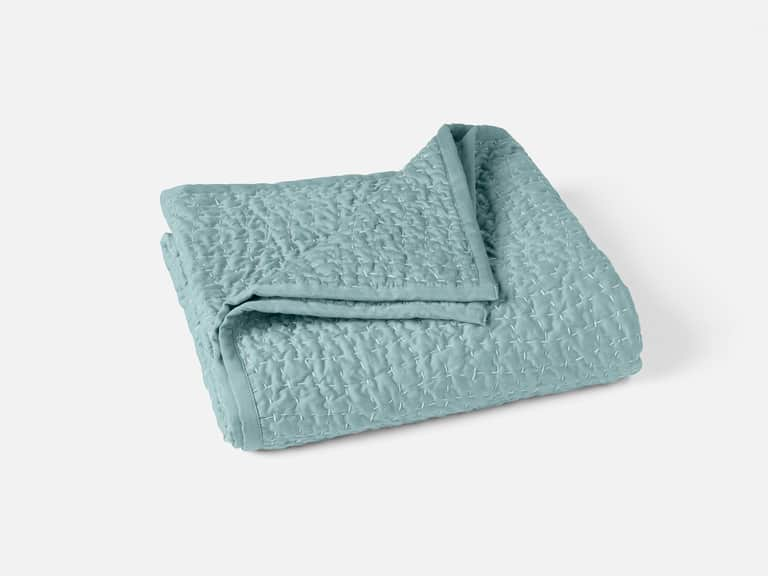
The organic cotton quilts in the Pebbled Handstitched Organic collection, for example, use tiny contrasting stitches inspired by traditional kantha quilts of India. The stitches form waves across the fabric, and natural variations in texture contribute to the finished surface. The organic cotton shell and batting, along with the hand-embroidered construction, make this a useful example of how stitching can be both a structural feature and a defining design detail. Explore the Pebbled Handstitched Organic Toddler Quilt.
That example also illustrates why stitch density should be read in context. The visible pattern, the textile’s hand, and the batting work together. Looking only at the spacing of the stitches would leave out the qualities of the cotton sateen and the way the quilt has been designed to be cared for.
When examining a hand-stitched piece, look for an overall sense of consistency appropriate to its style. Variation can be a natural part of handwork; what matters is that the stitching appears to serve the construction and that the product information explains the materials and care requirements clearly.
Does denser stitching mean a longer-lasting quilt?
Durability is often discussed as if one feature could determine a textile’s lifespan. In practice, longevity comes from the combination of fabric quality, batting, stitching, finishing, everyday handling, and care. Stitching helps secure a quilt’s layers, but simply adding more stitches does not guarantee that a piece will outlast another.
Closely spaced stitching can limit the amount of open area between quilted lines, while a more open pattern may allow a softer, looser drape. The resilience of the shell and thread, the suitability of the batting, and the quality of the construction all matter. So do the demands placed on the quilt: frequent washing, rough handling, or friction against other surfaces can affect any bedding over time.
Practical signs are often more helpful than trying to identify a universal ideal stitch count. Look for clear product details about the materials, construction, and care. Check that the stitching pattern appears consistent with the design and that the edges and binding are finished neatly. If the bedding will be washed regularly, an easy-to-follow care label is especially valuable.
For a quilt intended to become part of everyday life, consider how you actually use your bed. A decorative top layer that is lifted away at night may have different care demands from a quilt used as the main covering. The best choice is one whose construction, feel, and maintenance expectations align with your routine.
Care begins with the label
Cotton bedding benefits from care that respects both the fiber and the quilting. Washing too aggressively, using unsuitable temperatures, or overloading a machine can place unnecessary strain on fabric and seams. Always follow the instructions provided for the individual piece; cotton content alone does not tell you whether an item should be washed in a particular way.
For example, the Pebbled Handstitched Organic Toddler Quilt is specified for machine washing in cold water on a gentle cycle, with similar colors, and tumble drying on low. Its care guidance also allows for warm ironing if desired. That is product-specific advice, not a universal instruction for all hand-stitched or organic cotton quilts.
Before washing, check the care label and the quilt’s size relative to your machine. A quilt should have enough room to move without being compressed into a tight bundle. Use the recommended cycle and detergent, and avoid bleach unless the manufacturer explicitly permits it. If the label advises low-heat drying, follow that guidance rather than assuming higher heat will save time without consequence.
Regular airing and gentle handling can help keep bedding feeling fresh between washes, but they do not replace the cleaning instructions. If a quilt has a stain, consult its care guidance before applying a stain remover: treatments suitable for one fabric or dye may not be appropriate for another.
A thoughtful checklist before choosing
When comparing cotton bedding, read the construction as a whole. A few simple questions can help separate meaningful details from decorative language.
- What is the shell made from? Note the fiber and weave. These affect the surface feel, breathability, and appearance.
- What is inside? Batting material and weight contribute to warmth, fullness, and how the quilt settles.
- What does the stitching look like? Channels, grids, and hand-worked motifs create different visual rhythms and surface textures.
- How does it drape? Consider the intended dimensions and whether you prefer a tailored or generous fall over the bed.
- What care does it require? Check washing, drying, and ironing instructions before deciding whether the maintenance suits your household.
- How will it work with your existing layers? A quilt may be the star of the bed or a quieter foundation for sheets, shams, and other textiles.
For organic cotton bedding, certifications and sourcing details may also be part of your decision. Read the product information closely to understand which materials are certified and what the certification applies to. These details help provide context, while the tactile and practical qualities should still guide how the quilt fits your home.
Styling stitch as a design element
Once the construction feels right, let the quilting inform the way you style the bed. A quilt with a graphic grid can bring order to a room with layered prints; hand-stitched waves may soften a more minimal palette. A plain sheet or simple pillow sham can give a richly textured quilt enough breathing room to stand out.
Color changes the impression of stitching. Tonal thread tends to make the pattern feel subtle, allowing texture to appear gradually in the light. Contrasting thread makes the quilting more legible and brings attention to the lines themselves. Neither approach is inherently more refined; each creates a different mood.
Consider the room beyond the bed, too. Natural wood, woven baskets, matte ceramics, and softly finished walls can complement the tactile quality of cotton without turning the space into a catalogue of matching textures. A considered bedroom usually benefits from contrast: smooth against nubby, crisp against relaxed, patterned against plain.
Stitch density is at its most compelling when it supports the whole design. It can give a bed quiet structure, a tactile focal point, or a subtle sense of handcraft. The finest choice is not necessarily the most intricate one. It is the quilt whose fabric, fill, stitching, and care requirements come together in a way that feels natural to your sleep space.
The lasting appeal of a well-made cotton quilt
Stitching is easy to overlook when attention first goes to color or pattern. Yet it shapes how a quilt holds together, how its surface catches the eye, and how it behaves when folded or spread across the bed. Density, direction, and stitch style all contribute to the experience, but none tells the complete story on its own.
Look at the relationship between the stitches and the batting. Consider the cotton shell, the desired drape, the climate, and the practicalities of care. A carefully chosen quilt can bring warmth and texture to a bedroom without demanding that every element match. Its beauty may lie in a row of hand-worked stitches, the soft fall of the fabric, or the way a familiar layer becomes more inviting with use.
Ultimately, stitch density is not a scorecard. It is one of the quiet decisions that gives cotton bedding its character. Understanding it makes shopping more informed—and makes it easier to choose a quilt that feels as considered in the hand as it looks on the bed.