Bedding, considered
Down Comforters Decoded: Fill Power, Warmth, and Care
A down comforter can feel cloud-light or deeply cocooning, crisp or softly enveloping. Understanding fill power, fill weight, construction, and shell fabric makes it easier to choose one that suits both your bedroom climate and your idea of a good night’s sleep.
A beautifully made bed is an exercise in balance: texture against smoothness, a little visual drama against a sense of ease. The comforter is often its most important layer, and down has long appealed to sleepers for an unusual combination of warmth, loft, and low weight. Yet the language around down bedding can feel like a private vocabulary. Fill power is presented as a measure of quality; “all-season” promises versatility; baffled construction sounds technical. None of these terms, on its own, tells you exactly how warm a comforter will feel.
The more useful approach is to consider the whole object. Fill power describes the loft of the down, not the comforter’s warmth in isolation. The amount of down, the way it is distributed, the fabric around it, and the temperature of your room all contribute to the experience. Care matters, too: a comforter that is washed or dried incorrectly can lose the airy volume that makes it appealing.
This guide separates the specifications from the sensations. It explains what fill power means, how to compare warmth and weight, what to look for in construction and shell fabric, and how to maintain a down comforter without turning routine care into a project.
What is down?
Down is the soft, three-dimensional cluster found beneath the outer feathers of waterfowl. Unlike a feather, which has a central quill, a down cluster has fine filaments radiating from a small center. Those filaments create pockets that hold still air. The trapped air helps insulate, which is why down can provide warmth without the dense, heavy feel associated with some other filling materials.
Down comforters may use goose down, duck down, or blends. The species alone does not determine comfort or performance: the quality and cleanliness of the fill, the cluster size, the amount used, and the construction all matter. Product labels may also describe a blend of down and feathers. Feathers are generally flatter and heavier than down clusters, so a higher feather proportion can change the comforter’s loft and handfeel.
For shoppers, the practical question is not simply which bird the down came from. It is whether the comforter’s materials and specifications align with the warmth, weight, and care routine you prefer. Read the full description and care label rather than relying on a single prestige-sounding detail.
Fill power: loft, not a warmth rating
Fill power measures how much space a given weight of down occupies under a standardized test. It is commonly expressed as a number such as 600, 700, or 800. In broad terms, higher fill power indicates that the down clusters expand more and occupy more volume for their weight. That greater loft can make a comforter feel airy and substantial at the same time.
It is easy to mistake a high fill-power number for a direct promise of greater warmth. It is not. Fill power describes the insulating potential and loft of the down, while the total quantity of fill helps determine how much insulation is present. A comforter with a relatively high fill power but a modest amount of fill may feel lighter and less warm than a lower-fill-power comforter that contains more down. Construction and room conditions add further nuance.
Think of fill power as one clue about the character of the filling. Higher fill power often suits people who want an elevated, airy feel without adding as much weight. A lower number may still deliver satisfying comfort, depending on fill quantity and design. Rather than treating the highest available figure as an automatic upgrade, compare it alongside the comforter’s fill weight, warmth category, and intended season.
- Fill power: the loft or volume of the down relative to its weight.
- Fill weight: the amount of filling used in the comforter, commonly stated as a weight.
- Warmth: the overall insulating effect, influenced by fill power, fill quantity, construction, shell, and bedroom temperature.
Comforter warmth and weight: two different decisions
Some sleepers love a light layer that barely registers; others prefer the gentle pressure and enveloping warmth of a fuller comforter. These are separate preferences. A comforter can be warm without feeling especially heavy, and a weighty layer is not necessarily the warmest choice for every sleeper. The best match depends on both insulation and the sensation you want on your body.
Begin with your sleeping environment. A well-heated bedroom may call for a lighter comforter, even in winter. A cooler room, draft-prone home, or preference for sleeping with the thermostat low may make a warmer option more appealing. If your bedroom changes substantially from season to season, consider whether you are willing to switch bedding or would rather choose a moderate-weight layer and adjust with sheets or blankets.
“All-season” is a useful starting point, but it is not a universal standard. The phrase can describe a comforter intended to work across a range of conditions, yet warmth perception varies. One person may find the same comforter perfect through most of the year; another may feel too warm in summer or not warm enough on cold nights. Seek the manufacturer’s warmth guidance, and compare the stated fill weight and construction when those details are available.
It also helps to notice your own sleep habits. Do you tend to feel cold when you get into bed, then warm up overnight? Do you share a bed with someone whose temperature preferences differ from yours? Do you prefer a single, substantial layer or a lighter comforter that can be paired with a blanket? These everyday details are more informative than selecting by season name alone.
Baffled or sewn-through construction?
A comforter’s stitching determines how the filling is held in place. The two construction terms most often encountered are sewn-through and baffle-box. Each creates a different structure, and each can be appropriate depending on the comforter’s design and intended feel.
Sewn-through construction
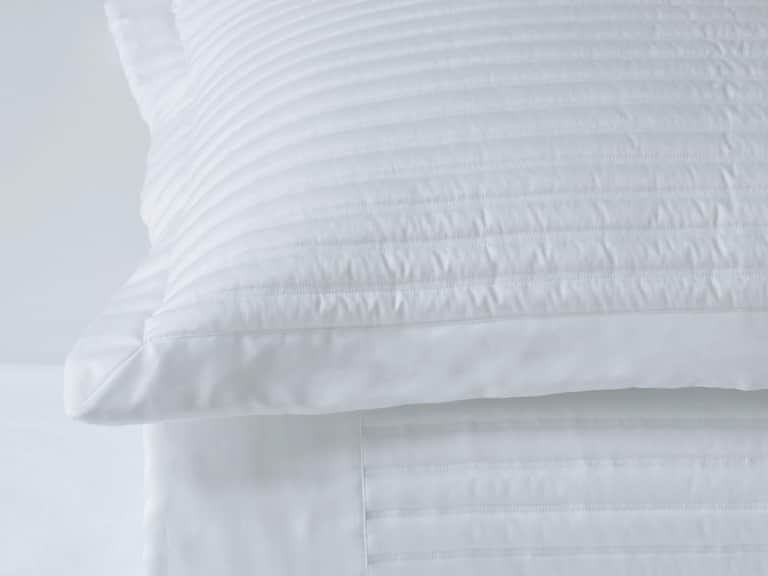
In a sewn-through comforter, the top and bottom layers of fabric are stitched directly together, creating compartments or channels. This helps keep the fill distributed rather than allowing it to migrate freely. It can produce a lighter, flatter profile and is often used for comforters designed for moderate warmth. Where the fabric is stitched together, however, there is less insulation than in the filled sections, so the pattern may create areas that feel cooler.
Baffle-box construction
Baffle-box comforters use narrow fabric walls between the top and bottom shells to form three-dimensional compartments. These walls allow the down to expand more fully, helping create consistent loft across the surface. Baffles can reduce the flatter, compressed areas associated with direct stitching, though the final warmth still depends on fill quantity, dimensions, and design.
Neither construction makes a comforter categorically better. If you like a streamlined, lighter layer, sewn-through construction may suit you. If loft and a fuller silhouette are priorities, a baffle-box design may be worth considering. Look for clear information about the compartment pattern and intended warmth, and remember that stitching is one element of a larger system.
The shell fabric: the first thing you feel
The shell is the fabric encasing the down. It influences how the comforter feels against the skin, how it drapes, and how effectively it contains the fill. Cotton is a common choice, with weave and finish contributing to its character. A smooth cotton shell can feel crisp and cool at first touch; a softer finish may feel more relaxed. Other shell materials are available, so check the product details if fiber content is important to you.
Thread count is sometimes treated as a shortcut for quality, but it should not be considered alone. A tightly woven shell is important because it helps contain fine down clusters and reduce the escape of fill. The fabric’s weave, yarn, finishing, and construction all influence its performance. A higher thread count does not automatically mean a more breathable, comfortable, or durable shell.
Consider the full sensory picture: do you like a crisp handfeel, or do you prefer a softer, more fluid drape? Do you use a duvet cover? A cover can add its own texture and affect the way the comforter feels, so the shell does not need to do all the stylistic work. A restrained, well-made shell can be an elegant foundation for a bedroom built around changing sheets, coverlets, and decorative layers.
For anyone sensitive to materials, the shell and fill deserve equal attention. Review fiber content, care guidance, and any sourcing or processing information supplied by the maker. Terms such as “hypoallergenic” can mean different things in different contexts, so look for specific descriptions of cleaning and processing rather than relying on a broad claim alone.
How to choose a down comforter that suits you
Shopping becomes more straightforward when you move from abstract ratings to a few practical questions. First, identify your room’s usual overnight temperature. Next, decide whether you want a lighter, airier layer or a more cocooning one. Then compare the comforter’s fill power and fill weight together, followed by its construction and shell details.
- Start with your climate. Consider the temperature in the bedroom, not only the season outside. Heating, insulation, windows, and personal habits can make two bedrooms in the same region feel entirely different.
- Choose your preferred sensation. If you want warmth with less weight, prioritize loft and a suitable warmth level. If you like a substantial layer, look for a design that offers more fill and the desired profile.
- Compare specifications as a set. Read fill power alongside fill weight, construction, dimensions, and warmth guidance. A single number cannot tell the whole story.
- Check the shell and care label. Confirm the fabric content, cleaning instructions, drying requirements, and any restrictions before purchase.
- Think about the bedding around it. A duvet cover, top sheet, and additional blanket can change the overall warmth and handfeel. Choose a comforter that works with the layers you actually use.
Size is part of comfort as well as appearance. A comforter that is too narrow may not provide enough coverage for two people, while a larger drape can create a generous, hotel-like finish. Check the comforter’s measurements against your mattress and consider whether you share the bed. Bedding sizes and mattress depths vary, so dimensions are more reliable than the label “queen” or “king” alone.
Down comforter care: preserve the loft
Down can last well when it is kept clean, dry, and evenly distributed, but its care is less casual than that of a standard cotton sheet. Always begin with the manufacturer’s care label. Some comforters are suitable for home washing; others may require professional cleaning. The shell, fill, size, and construction all affect the safest method, so one general instruction cannot replace the care guidance for your specific piece.
Use a cover and air the comforter
A duvet cover creates a washable protective layer between the comforter and everyday use. It can reduce how often the comforter itself needs cleaning while offering an easy way to change the look of the bed. Regularly airing the comforter in a well-ventilated space can also help refresh it. Avoid storing down while damp, and protect it from prolonged exposure to moisture.
Wash only when appropriate
If the label permits machine washing, use the recommended settings and a suitable washing machine with enough room for the comforter to move. An oversized comforter crowded into a small drum may not rinse or clean evenly. Follow the stated detergent guidance and avoid bleach or fabric treatments unless the manufacturer specifically allows them. If the label recommends professional cleaning, or if you are uncertain, consult a cleaner experienced with down bedding.
Dry thoroughly
Drying is especially important. Down can clump when damp, and moisture trapped inside can compromise freshness. Follow the label’s temperature instructions and allow adequate time for the comforter to dry throughout, not just on the surface. During drying, periodically redistribute the fill according to the care instructions. Do not put the comforter away until it is completely dry.
For routine upkeep, gentle handling is usually preferable to frequent deep cleaning. Fluffing can help restore an even appearance, while a duvet cover offers a practical first line of protection. If a small spill occurs, follow the manufacturer’s spot-care guidance rather than applying an untested cleaner. Careful, label-led maintenance helps protect the comforter’s loft and the shell that contains it.
Common misconceptions, clarified
- “Higher fill power always means warmer.” Fill power describes loft relative to weight. Total fill, construction, and room temperature also shape warmth.
- “A heavier comforter must be warmer.” Weight and insulation are related but not interchangeable. A lofty comforter can provide warmth without the same dense sensation as a heavier layer.
- “All-season means right for everyone.” It is a broad product description, not a guarantee of identical comfort across different sleepers and climates.
- “Thread count tells me everything about the shell.” Weave, yarn quality, finishing, and down containment matter too.
- “Down should never be washed.” Some down comforters can be washed according to their labels; others require professional care. The specific instructions are decisive.
A final word on finding the right layer
The best down comforter is not necessarily the one with the most impressive specification or the loftiest product description. It is the one that makes sense for your room, your sleeping temperature, and the way you like bedding to feel. Fill power can indicate how the down behaves; fill weight offers context about how much is used; construction shapes distribution and loft; and the shell determines much of the comforter’s immediate handfeel.
Take a moment to compare those details rather than buying by a single headline number. Consider the temperature of your bedroom, the layers you already use, and how much maintenance you are comfortable taking on. With those preferences in view, the terminology becomes less mysterious—and choosing a comforter becomes a more considered pleasure: a quiet decision that makes the bed feel inviting long after the room has been styled.